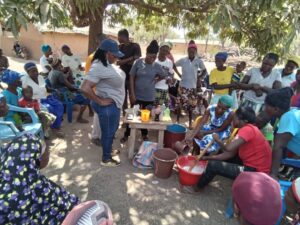
The soap making training conducted at Kulgudoli community for 30 women, generously funded by USAID RING II, signifies a pivotal investment in women’s empowerment and community development. This initiative not only equips participants with practical skills but also fosters economic independence and sustainability within the community.
Through hands-on workshops and expert guidance, women are introduced to the art and science of soap making, learning various techniques, ingredients, and safety protocols. By demystifying the soap making process and providing comprehensive training, participants gain the confidence and expertise to produce high-quality, marketable products.
Moreover, the training program extends beyond technical instruction to encompass broader topics such as entrepreneurship, marketing, and financial management. Participants receive valuable insights into market trends, product branding, and business planning, empowering them to establish and manage successful soap making enterprises.
By targeting women specifically, the initiative addresses gender disparities in economic opportunities and promotes women’s active participation in income-generating activities. As primary caregivers and household managers, women play a pivotal role in community development, and empowering them economically has far-reaching benefits for families and societies.
Furthermore, the funding provided by USAID RING II underscores the importance of strategic partnerships in advancing sustainable development goals. By leveraging resources and expertise, such collaborations amplify the impact of grassroots initiatives, catalyzing positive change and fostering resilience in underserved communities.
In essence, the soap making training at Kulgudoli community exemplifies the transformative power of skill-building and collaborative partnerships in promoting women’s empowerment and community prosperity. Through targeted investments and capacity-building efforts, initiatives like these pave the way for inclusive growth, poverty alleviation, and gender equality, ultimately contributing to the realization of a more just and equitable society.